AI Distribution Operating System
AIDOS
0 to 22,000 followers in 3 months, over a million people reached every month, and high-ticket clients booked off the back of it. This is the system that did it — and what I'm going to teach you to build.
The problem
You can't keep up with your niche by hand. Nobody can.
Every competitor, every script, every trend — across YouTube, Instagram, and X. Tracking that is a full-time job on its own.
Then you still have to come up with the idea, make the thing, and post it on every platform.
- 01
Watch the niche
Dozens of creators, three platforms, every day.
- 02
Come up with the idea
From a feed, a hunch, or a screenshot folder.
- 03
Make it
Script, film, edit, caption — again for every platform.
- 04
Post it everywhere
Each app, each time, no memory of what worked.
Four jobs, and the only thing connecting them is you.
The niche map
This is what keeping up looks like.
Each dot is an account. Each line is a follow. Nothing else decides where they sit, so the clusters are the niche sorting itself. This is what Intelligence reads — and what you’d be holding in your head to do it by hand.
Niche map
The live map isn’t reachable right now.
Your email opens the map · 1,948 accounts · 22,879 follows · 13 communities
The loop
One system. Four parts. It runs itself.
Track what's working. Turn it into ideas. Make the content. Post it everywhere — and every post you ship teaches the system what to make next.
- 01Gather
Intelligence
This is where your ideas come from.
- 02Decide
Ideation
Every idea leaves here as a brief: one idea, ready for any platform.
- 03Make
Production
Hundreds of posts shipped this way. Winners kept, the rest learned from.
- 04Ship
Publishing
That's the loop. It's what took the account from 0 to 22K.
A good idea with a bad script beats a bad idea with a perfect one. The whole system exists to get the idea right.
Component 01: Intelligence
Every competitor. Every script. Every trend.
Tracked automatically, across your whole niche, every day. Plus your own posts — what held attention, what didn't, and why.
Inside
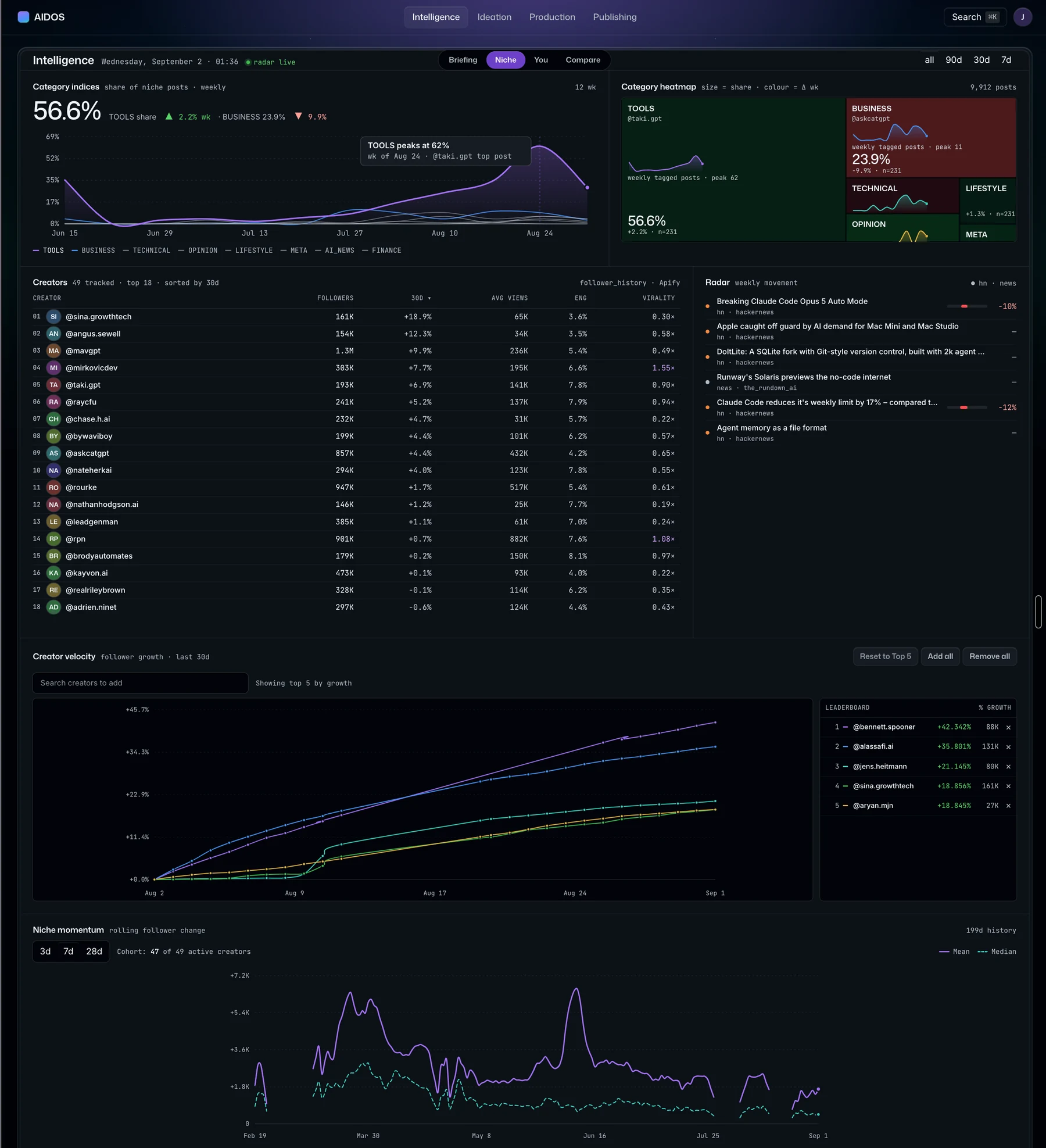
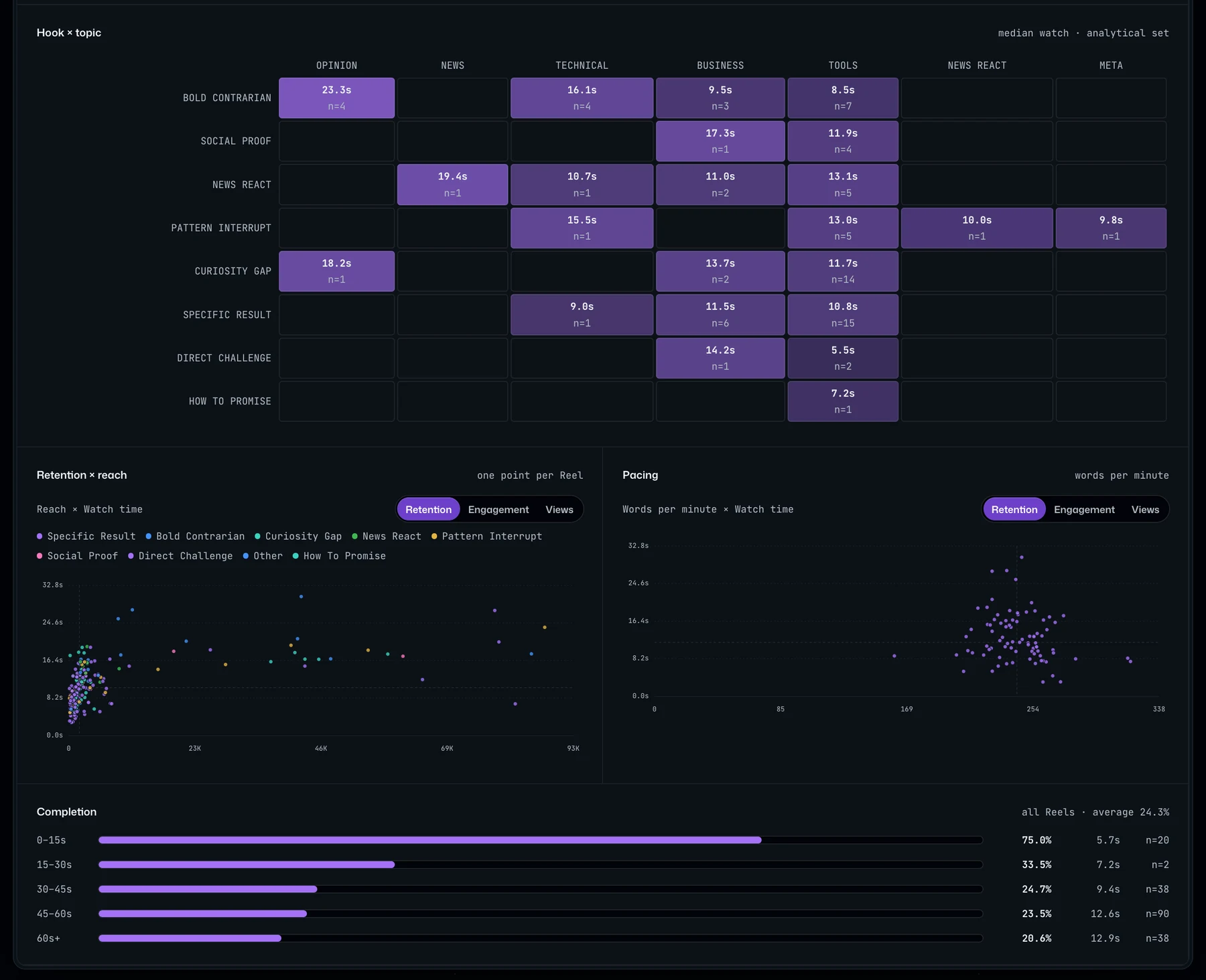
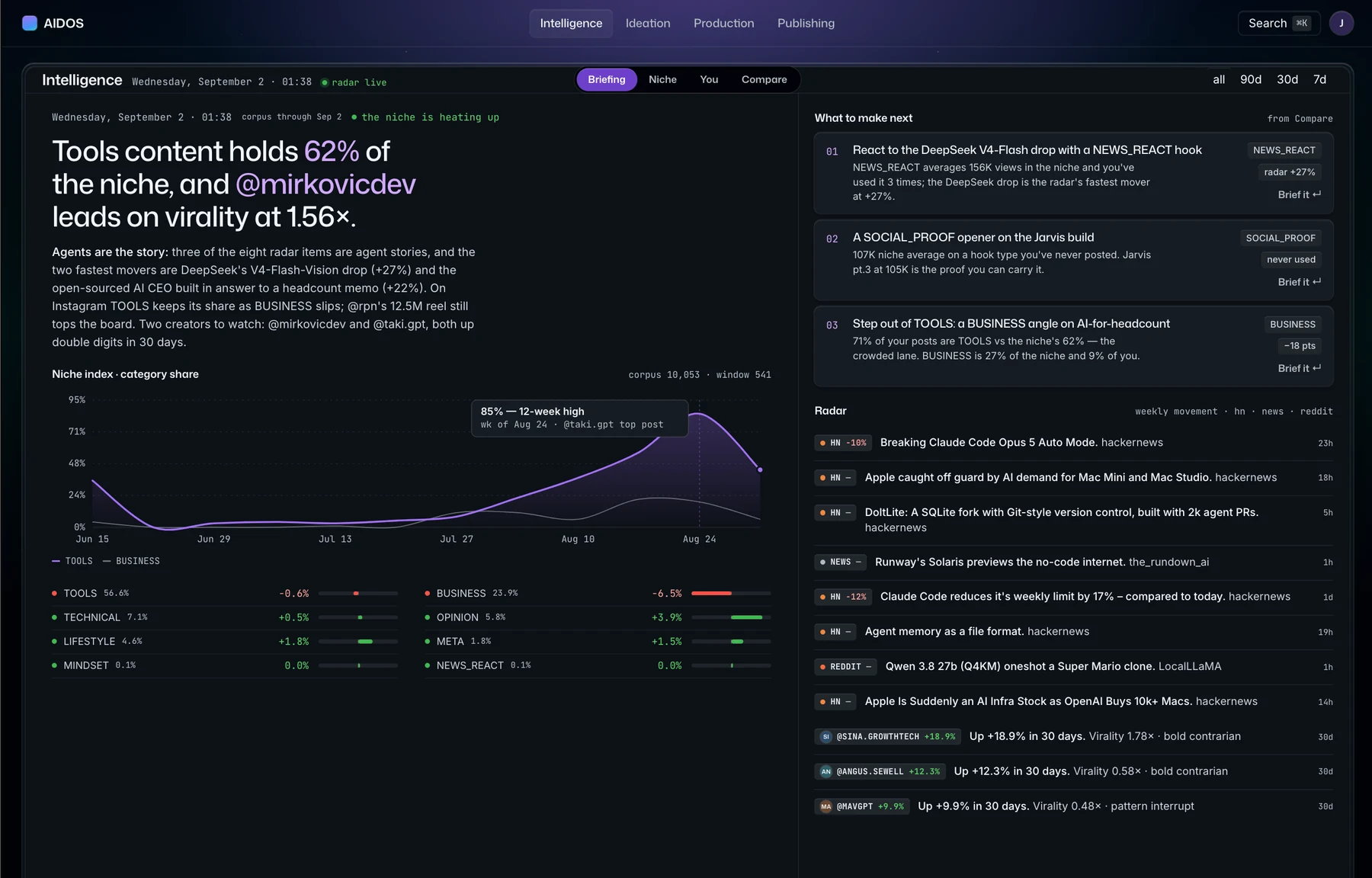
Showing Niche
This is where your ideas come from.
Component 02: Ideation
Ideas that come from the data, not a blank page.
The most important part. A good idea with a bad script beats a bad idea with a perfect one — so the system is built to get the idea right, fast.
Inside
- ReposWhat's blowing up in your niche right now.
- Posts · screenshot comingThe best-performing posts, to remix with your spin.
- Workshop · screenshot comingTalk it through until it's a brief.
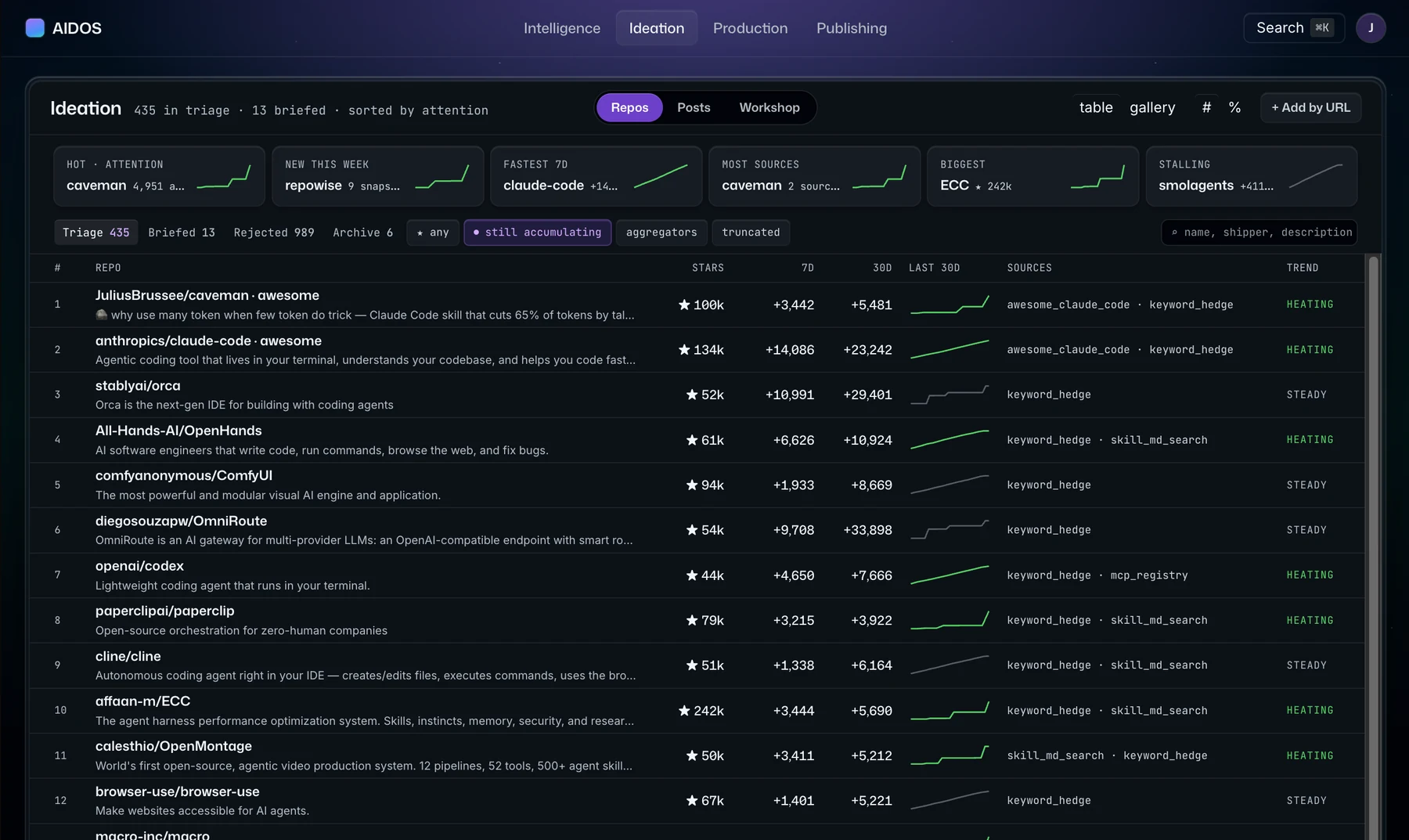
Showing Repos
Every idea leaves here as a brief: one idea, ready for any platform.
Component 03: Production
AI scripting and video editing, built to test at scale.
One brief becomes a reel script, an X post, an X article, a LinkedIn post. Film once, and the Edit Bay cuts five versions — then you post them all and keep the winners. At peak I was testing 30 posts a week.
Inside
- BriefsScript, hooks, caption — written from the brief.
- Edit Bay · screenshot comingDrop in footage, get five edited reels to test.
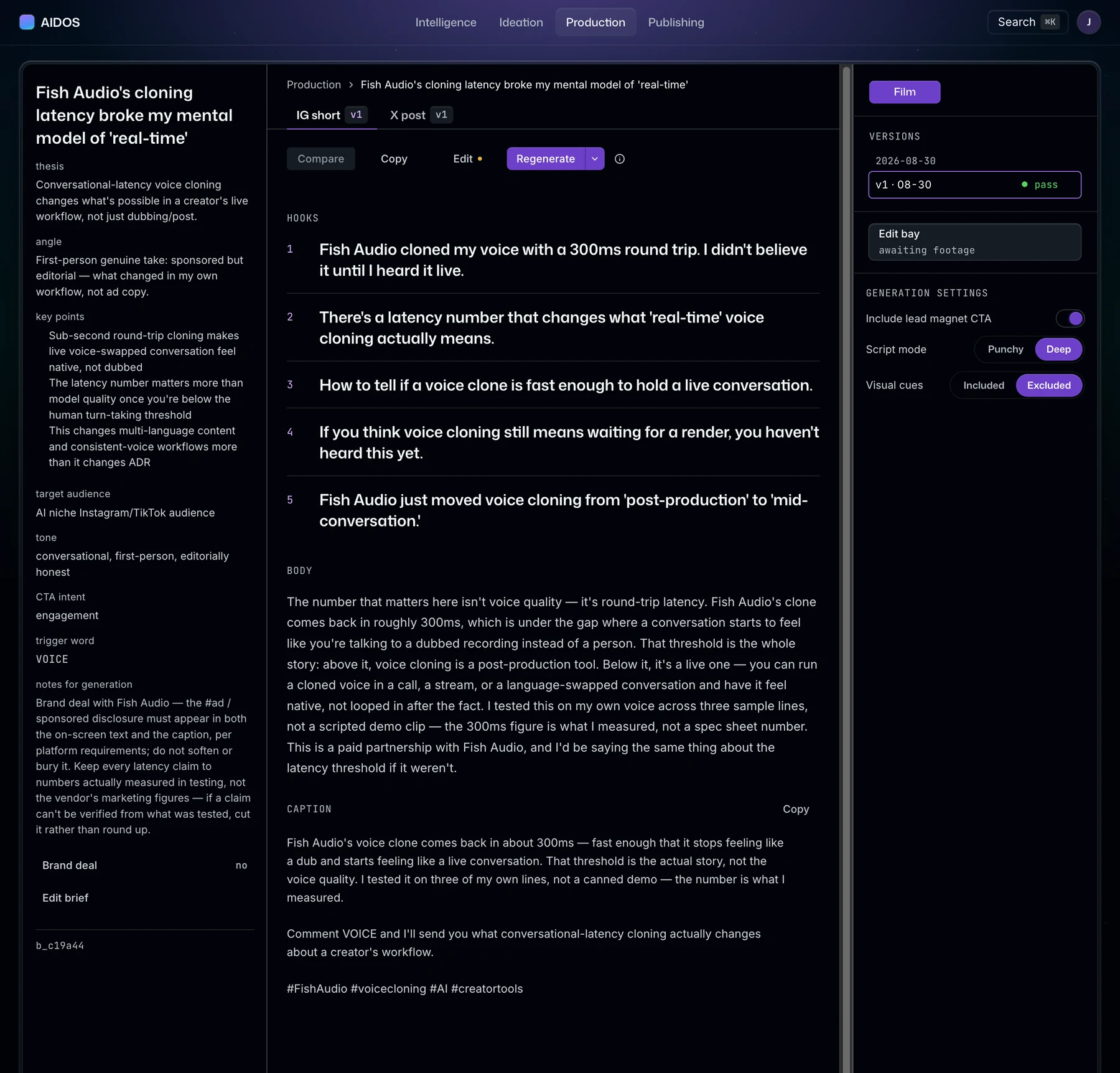
Showing Brief
Hundreds of posts shipped this way. Winners kept, the rest learned from.
Component 04: Publishing
Post everywhere from one place.
Drop it on the calendar and it goes out — Instagram, LinkedIn, X. When it posts, the results flow straight back into the system, so next week's ideas are better than this week's.
Inside
- ScheduleOne calendar for every platform.
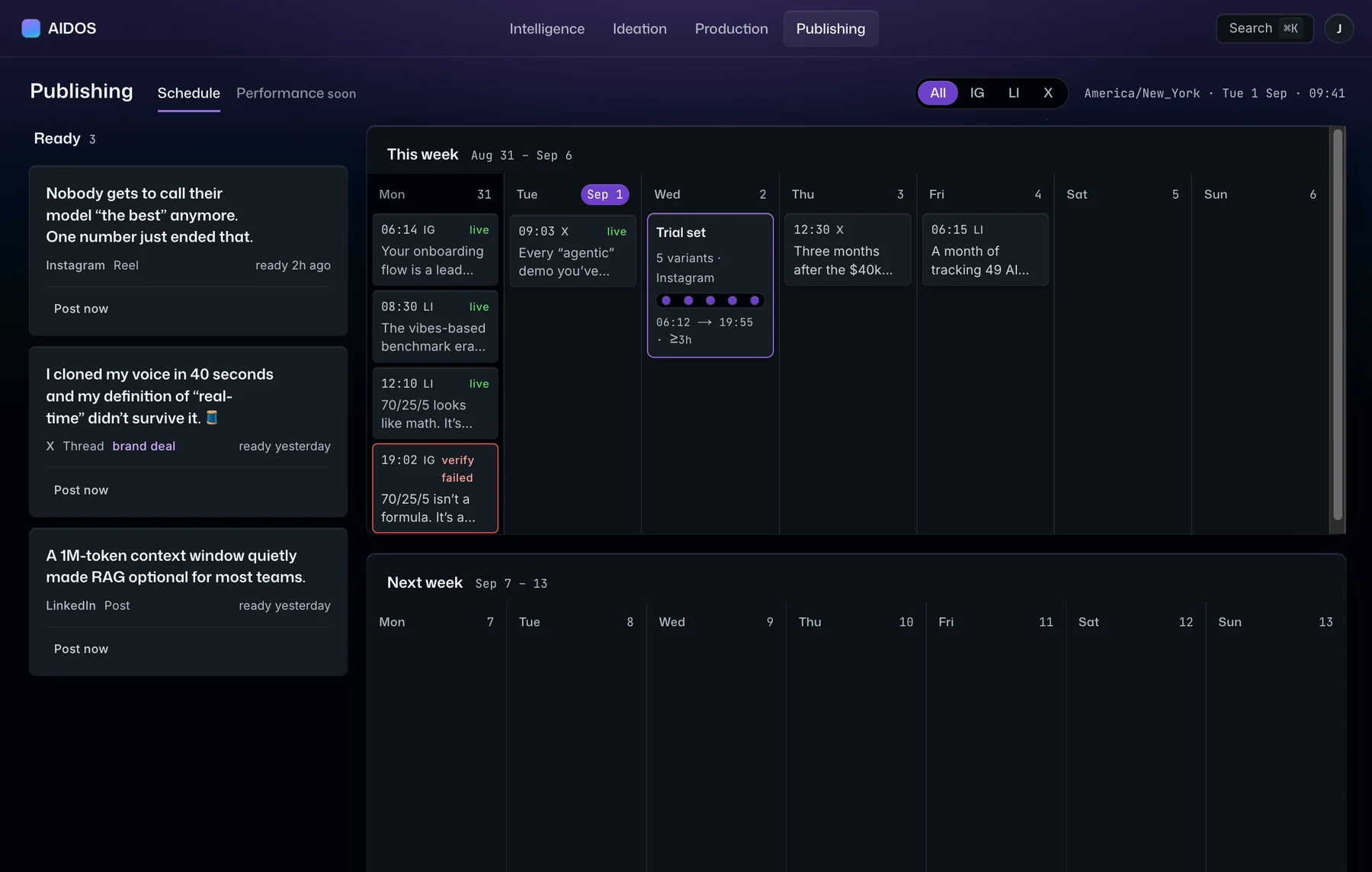
Showing Schedule
That's the loop. It's what took the account from 0 to 22K.
Built and run daily
This is not a mockup.
Every screen on this page is my own system, running on my own content. Here's what it did.
- 0 → 22K
- followers in 3 months
- 1M+
- people reached every month
- 30 / week
- posts tested at peak
- Hundreds
- of posts shipped
What's coming
Build your own Content OS with me.
Six live sessions over two weeks. You leave with the whole system — tracking, ideas, scripting and editing, publishing — set up for your niche, on tools you own. A to Z.
- 10
- people
- TBD
- price
- 6
- live sessions
- 2 weeks
- start to finish
01
Intelligence
Track every competitor, script, and trend in your niche.
02
Ideation
Turn the data into ideas people actually want.
03
Production
AI scripting and editing. Test 25+ reels, keep the winners.
04
Publishing
Post everywhere from one place. Close the loop.
Join the waitlist.
Ten seats. No payment now, no commitment. The list hears first.
Questions, answered.
Not today. What you see is my own system. The cohort teaches you to build yours.
No. We build it together, live, step by step. If you can follow along on a call, you can do this.
Intelligence today reads YouTube, Instagram and X. Production generates short-form scripts, X posts, X articles and LinkedIn posts. Publishing schedules across Instagram, LinkedIn and X.
One idea, written down once, that the system turns into a reel script, an X post, or a LinkedIn post. Every piece of content starts as a brief.
No date yet. It's ten people, six sessions over two weeks. Join the waitlist and you'll hear first.